

Noise & Vibration Management in North Carolina’s Rail Transit Boom

Noise & Vibration Management in North Carolina’s Rail Transit Boom
North Carolina is experiencing a significant surge in rail transit development. From Charlotte’s expanding commuter and light-rail network to Raleigh’s federally backed corridor toward Richmond, the state is investing heavily in next-generation transit infrastructure. These initiatives are designed to address rapid population growth, rising congestion, and the increasing demand for multimodal mobility.
Yet alongside this rail transit expansion comes a challenge often overlooked until late in the planning process: noise and vibration impacts. Urban rail transit projects—both during construction and operations—can create significant noise and vibration concerns and effects on nearby residences, businesses, and sensitive infrastructure.
North Carolina: An historic investment in the region’s transportation future
In a landmark move, Mecklenburg County voters approved a one-cent sales tax increase referendum on November 4, 2025, projected to generate approximately $19.4 billion over 30 years. Around 40% is earmarked for rail transit, 40% for roads and vehicle infrastructure, and 20% for bus and micro transit projects.
This funding unlocks long-planned projects which include:
Charlotte – Red Line Commuter Rail
The Red Line is a proposed 25-mile commuter rail project that will provide a regional connection between Uptown Charlotte and the downtowns of Huntersville, Cornelius and Davidson, with potential to extend into Mt. Mourne in Mooresville.
Charlotte – Silver Line Light Rail:
The Silver Line Locally Preferred Alternative (LPA) is a planned 29-mile, 30 station light rail alignment from the City of Belmont in Gaston County, through Center City Charlotte and the Town of Matthews in Mecklenburg County, and into Stallings and Indian Trail in Union County.
Charlotte – Blue Line Extension:
The Blue Line Extension to Pineville and Ballantyne Locally Preferred Alternative (LPA) is a proposed extension of light rail service from the existing terminus of the Blue Line at I-485/South Boulevard to Community House Road in Ballantyne.
Raleigh – S-Line High-Performance Rail:
The S-Line Raleigh to Richmond, or R2R, project is a proposed passenger rail service that will connect communities from Raleigh to Richmond, Va
Elsewhere in the Carolinas there is also the proposed Camp Hall Industrial Corridor Project, a 22.7-mile freight rail corridor that will run from the Camp Hall Commerce Park in Berkeley County, South Carolina, and then travel north and east to a rail network near the Santee Cooper Cross Generating Station in Pineville, South Carolina.
With so many rail-based projects planned for the Carolinas, early and effective noise and vibration planning will be critical to smooth transit development and deployment.
Noise and Vibration: Hidden but Real in Urban Rail Transit Projects
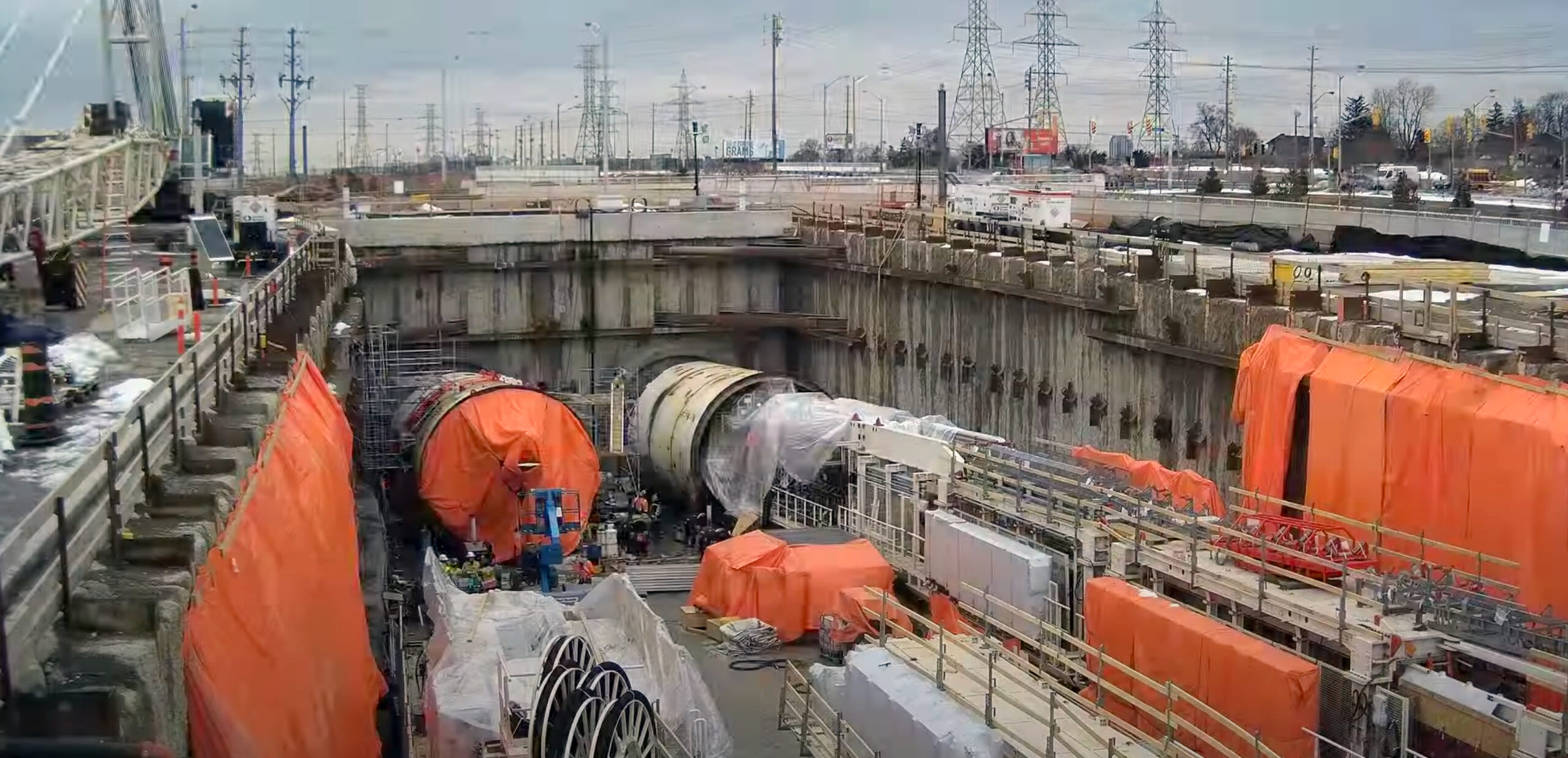
Rail transit construction produces high levels of noise, and linear infrastructure projects often impact many people and buildings along the corridor. Ground-borne vibration from pile driving, vibratory compaction, and demolition can propagate through soil and structures, causing nuisance, disturbance, and potentially damage in nearby buildings.
Once operations begin, engine noise, wheel-rail interactions, track vibration, and station equipment (such as transformers and cooling systems) can generate ongoing disturbance—especially in dense urban areas with nearby schools, hospitals, or vibration-sensitive facilities. Historic neighborhoods and older buildings are particularly vulnerable to vibration impacts.
Without proactive mitigation and planning considerations, noise complaints and the potential for vibration-induced damage can delay projects, increase retrofit costs, and erode public trust.
Federal Noise and Vibration Regulations for Rail Transit Projects
Rail transit projects typically need to comply with established federal guidance that sets numeric criteria for both construction and operational noise and vibration to minimize impacts on communities and sensitive buildings. The primary reference is the FTA Transit Noise & Vibration Impact Assessment Manual (2018), which provides methodologies and thresholds for assessing both airborne noise and ground-borne vibration.
Key Federal Guidance Includes:
1. Operational Noise Criteria
- The FTA manual provides a methodological framework to determine the degree of noise impact a project may have. Limits vary with the existing noise exposure at each assessment location.
- Thes noise impact thresholds guide mitigation decisions, such as track design, noise barriers, and building insulation.
2. Construction Noise
- Recommended daytime sound levels limits for residential areas include an 8-hour Leq limit of 80 dBA, and a nighttime limit of 70 dBA Leq, with additional 30-day average limits cited.
- Construction methods that exceed these thresholds typically require mitigation, including scheduling restrictions, quieter equipment, and temporary noise barriers.
3. Construction Vibration (Structural & Human Impact)
- Peak particle velocity (PPV) limits for buildings depend on structural category:
– Category IV (historic/fragile buildings): 12 in/s
– Category III (older timber/masonry): 2 in/s
– Category II (engineered concrete/masonry): 3 in/s
– Category I (reinforced concrete/steel/timber): 5 in/s
- Mitigation measures may include pre-construction surveys, alternative piling methods, or temporary isolation systems.
4. Operational Ground-Borne Vibration
FTA sets indoor vibration thresholds (VdB) for human perception and annoyance. People generally begin to perceive vibration at around 65 VdB, with strong annoyance expected where vibration exceeds 85 VdB. Sensitive facilities such as hospitals or labs typically require stricter limits.
5. Federal Railroad Administration (FRA) Guidance
For projects under FRA jurisdiction or with high-speed rail elements, FRA guidance on Assessing Noise & Vibration Impactscomplements FTA criteria, particularly for high-speed rail corridors.
The Role of Expert Planning in Transit Noise and Vibration Management
Early engagement of acoustical specialists is key to successfully managing noise and vibration in transit projects. Critical strategies include:
1. Design Phase Mitigation
- Route selection considering noise and vibration impacts.
- Identification of sensitive receptors (schools, hospitals, historic buildings) and stakeholder concerns.
- Predicting construction and operational noise using FTA and industry-standard methodologies.
- Selecting track and subgrade designs to minimize vibration (e.g., resilient fasteners, floating slab tracks).
- Assessing and designing noise barriers, berms, or other mitigation structures.
2. Construction Tendering
- Specifying noise and vibration mitigation requirements, expectations, and performance objectives in tender documents.
- Defining monitoring responsibilities: contractor-led or authority-managed, in either case qualified expertise is needed for effective monitoring programs.
3. Construction Phase Monitoring and Mitigation
- Deploying continuous noise and vibration monitoring at critical receptor sites.
- Scheduling high-impact work during less sensitive hours.
- Utilizing quieter construction equipment and methods.
- Installing temporary noise barriers and real-time feedback systems to adjust construction methods and mitigation as thresholds are approached.
4. Operational Phase Management
- Maintaining rolling stock, rails, and transit vehicles to minimize noise.
- Utilizing operational procedures (speed, braking, maintenance) to reduce vibration.
- Continuing noise and vibration monitoring to identify and address emerging issues.
- Engaging communities to build trust and respond proactively.
Projects that integrate these strategies from the outset are more likely to streamline permitting, and to maintain community acceptance.
Mitigating Noise and Vibration: Early Acoustical Consulting Drives Better Transit Outcomes
North Carolina’s rail transit boom represents a generational opportunity to improve mobility. Yet, community quality of life, public support, and system reliability depend not only on routes and modes but also on how noise and vibration are managed. Early engagement of a qualified acoustical consultant is essential for predicting, assessing, monitoring and mitigating impacts during both construction and operations. A consultant with the experience and expertise of HGC Noise Vibration Acoustics can help contracting authorities and contractors achieve compliance, minimize community disruption, and ensure long-term project success.
By integrating these services from the outset, transit projects in Charlotte, Raleigh, and across the Carolinas can proceed efficiently, with minimal disruption to residents, businesses, and sensitive infrastructure, ensuring a smoother path from planning through operations.