

Outdoor Sports Court Noise: What To Do When Regulations Aren’t Clear

Outdoor Sports Facilities and Noise Complaints: Considerations for Municipal Planning and Enforcement
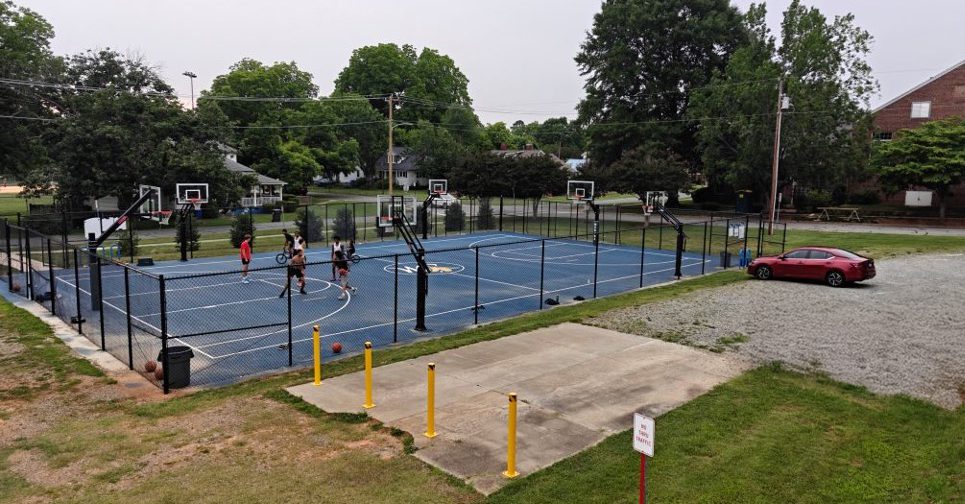
Outdoor recreation facilities like basketball, tennis, and pickleball courts are vital to community life — promoting health, social connection, and active use of public spaces. But increasingly, these same facilities are becoming sources of noise complaints, especially when they’re located close to residential areas.
For those tasked with assessing or avoiding such complaints, the challenge is how to assess noise fairly when local rules are qualitative rather than quantitative.
The Challenge of Qualitative Noise Regulations for Municipalities
Across North America, many municipal noise ordinances and bylaws use descriptive language like “unreasonably loud,” “disturbing,” or “unnecessary” noise, without setting quantifiable decibel limits. This provides flexibility but leaves enforcement officers with no clear benchmark for enforcement. Furthermore, when proponents of outdoor multi-use athletic courts want to design facilities to achieve a reasonable acoustic benchmark, the lack of clear noise limits introduces inherent uncertainty into the project.
Without numeric thresholds, deciding what constitutes a violation often comes down to subjective interpretation. What one resident considers disturbing, another may view as the normal sound of community activity.
As new recreation trends such as pickleball expand rapidly, these vague ordinances are being tested — and, in many cases, found lacking.
The Unique Noise Challenge of Outdoor Multi-use Athletic Courts
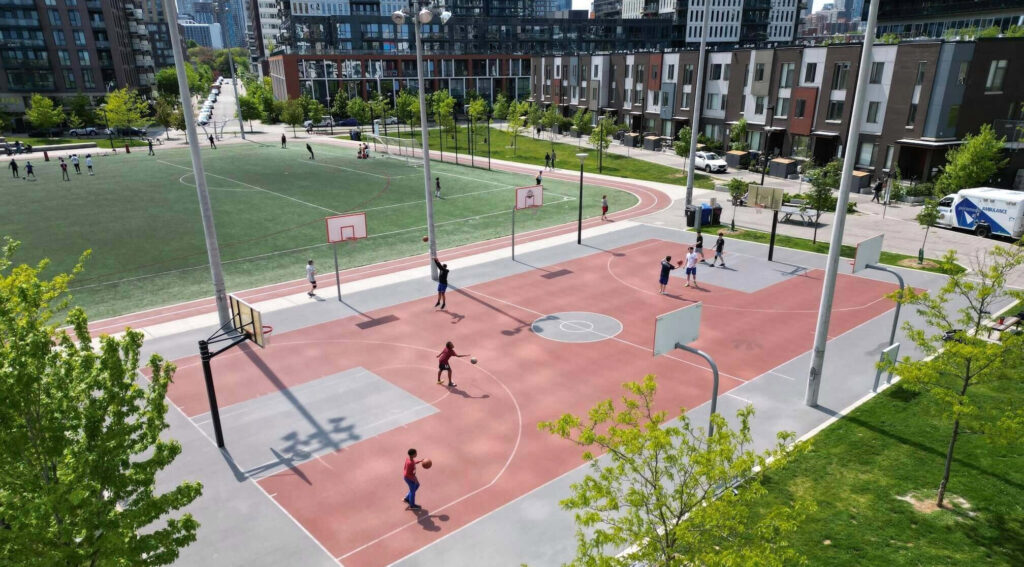
Outdoor recreational courts generate sounds that are both intermittent and impulsive, differing significantly from steady sources like continuous traffic or HVAC systems. This means that even when regulations have numeric targets, generally intended for steady noise sources, assessment of sports noise can be difficult.
Key issues include:
-
Sharp impact sounds: Ball and paddle strikes can produce peaks significantly louder than background noise.
-
Human voice peaks: Shouting and cheering during games often dominate the acoustic environment during play.
-
Evening activity: Recreational play often continues into late hours, when ambient sound levels are typically lower.
-
Residential proximity: Newer courts are often installed in residential settings.
-
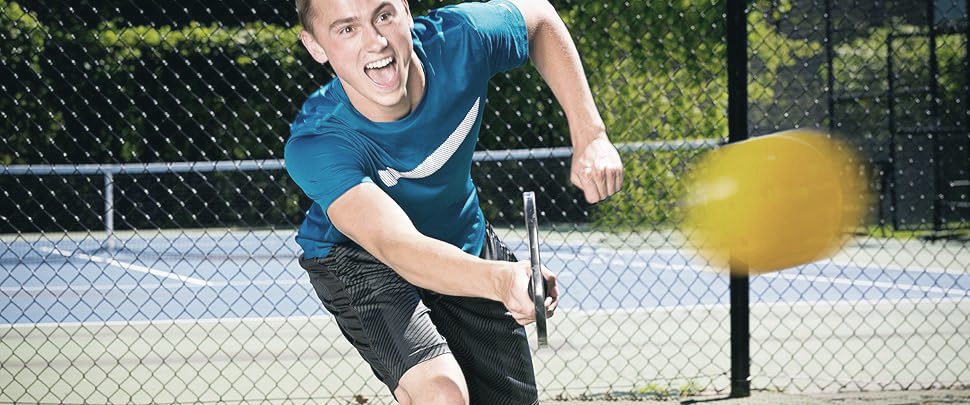
Pickleball’s distinct sound: The rapid “pop” of the hard pickleball paddle and ball can be more noticeable — and more irritating — than other outdoor sports related noise.
Municipal Considerations for Noise Ordinance Enforcement and Planning
These unique characteristics make outdoor sports noise difficult to evaluate even when laws and guidelines provide numeric targets – and much more so when only qualitative wording is provided.
Municipal officers tasked with enforcing noise from outdoor sports and recreational venues can be faced with a challenging task: separating the sound of an intermittent sound source from background noise, necessitating advanced training and equipment.
Emerging Municipal Noise Standards
Across North America, municipalities are increasingly confronting the limitations of older, qualitative noise ordinances when responding to outdoor recreation area complaints — particularly those involving basketball, tennis, and the rapid growth of pickleball. Many of these laws were written decades ago to address industrial noise or amplified music, not repetitive impulse sounds from recreational play in residential settings.
The result is a growing inconsistency in how municipalities assess “disturbing” or “unreasonable” noise, and an emerging trend toward modernizing rules with measurable, decibel-based standards. Below are examples from both the United States and Canada showing how different jurisdictions are handling this issue — from vague and problematic rules to those being actively updated in response to complaints and public pressure.
North Carolina: Vague City and County Noise Ordinances Causing Interpretation Challenges
In many North Carolina municipalities, including mid-sized cities and smaller towns, local noise ordinances rely on subjective descriptions such as “unreasonably loud,” “disturbing,” or “unnecessary”, without specifying any numerical sound limits.
For example, Chapter 14, Article IV of the City of Mebane’s ordinance prohibits “any unreasonably loud, disturbing, and unnecessary noise in the city” — meaning that there is judgment involved in assessing noise. Other jurisdictions, such as Durham and Wake County use similar qualitative approaches, often with exemptions for sporting events but without measurable criteria.
This lack of specificity complicates consistent enforcement and limits a municipality’s ability to clearly communicate expectations and enforcement decisions to residents.
Texas: Nuisance-style Noise Ordinances Language and Enforcement Gaps
Many Texas cities, including Dallas and suburban communities, rely on nuisance-style ordinances that prohibit “loud and raucous noise.” For example, Dallas City Code § 32-11.4 forbids such noise in public parks, while Texas City defines violations broadly as “unreasonably loud, disturbing, or unnecessary noise.” Because Texas counties have limited authority to regulate environmental noise, municipalities often depend on subjective nuisance enforcement, which can be inconsistent. In recent years, some cities like Austin have begun exploring decibel-based frameworks for measuring community noise after rising disputes around pickleball and outdoor music venues.
Ontario, Canada: Municipalities Set Decibel Limits for Outdoor Sports and Recreation Courts
Some Ontario municipalities are actively updating noise bylaws following public complaints about outdoor pickleball and basketball court noise. Older bylaws using vague terms like “unreasonable noise” are being replaced with clearer daytime and nighttime decibel limits and improved enforcement guidelines. For example, Oakville, Ontario updated its Noise Bylaw in 2024 to introduce specific sound-measurement standards, clarify enforcement authority, and enhance complaint-handling related to outdoor sports and mechanical equipment. The City of Toronto Noise Bylaw also uses quantitative thresholds in its bylaw (50 dBA for residential areas between 7 a.m.–11 p.m.).
Alberta, Canada: Calgary Introduces Quantitative Noise Frameworks for More Objective Bylaw Enforcement
Alberta municipalities, particularly Calgary, provide some of the clearest quantitative noise frameworks in Canada. Calgary’s Residential Noise Bylaw sets limits of 65 dBA daytime and 50 dBA nighttime for continuous sounds, and 85/75 dBA for non-continuous or impulsive sounds — directly applicable to outdoor recreation facilities, particularly pickleball impacts.
This approach allows enforcement to rely on measurable evidence rather than subjective perception.
Key Takeaways for Municipalities and Outdoor Recreational Centers
-
Vague qualitative noise rules make enforcement difficult and can escalate resident disputes.
-
Quantitative noise standards provide transparency, consistency, and defendable enforcement.
-
The unique characteristics of outdoor sports noise make measurement more challenging, creating added difficulty for officers responsible for enforcement.
-
The rise of pickleball has been a major driver of noise ordinance and bylaw modernization, illustrating how evolving outdoor recreational trends are reshaping municipal policy.
The Valuable Role of Acoustical Consultants
When ordinances are unclear, acoustical consultants like HGC Noise Vibration Acoustics play a crucial role in bridging subjective perception and objective noise measurement and assessment. Advanced acoustical equipment, noise analysis tools and training can be deployed both when rules are vague and when numeric targets apply.
An Acoustical Consultant’s work supporting municipalities typically includes:
-
Sound Measurement: Collecting spectral data (sound level data at multiple frequencies), Leq (average), Lmax (peak), and time-history sound level data using calibrated equipment.
-
Benchmarking: Comparing results to recognized standards, such as applicable noise ordinances, standards in nearby municipalities, EPA documents (55 dBA LDN) or other helpful guidelines.
-
Source Analysis: Distinguishing between recreation noise and other sources of noise such as road traffic, a task made possible by advanced instrumentation and analysis tools.
-
Sound Mitigation Modeling: Assessing the effectiveness of potential changes, such as noise barrier construction, reorientation, increasing setbacks or programming changes.
-
Policy Support: Advising municipalities on updating laws and setting measurable, defensible thresholds for noise.
-
Regulation Development: Municipalities often contract with acoustical consultants like HGC to help draft or revise noise ordinances, ensuring they are data-based, practical, and reflect community context. This ensures new regulations are practical, enforceable, and defensible.
-
Municipal Staff Training in Noise Measurement & Assessment: Providing practical training for key staff on how to properly measure, interpret, and document noise using standardized procedures.
Municipal Noise Management: Best Practices for Pickleball, Tennis, Basketball & Other Outdoor Sports Recreation Spaces
To effectively manage outdoor recreation noise municipalities should:
-
Adopt measurable noise limits in decibels with clear testing procedures.
-
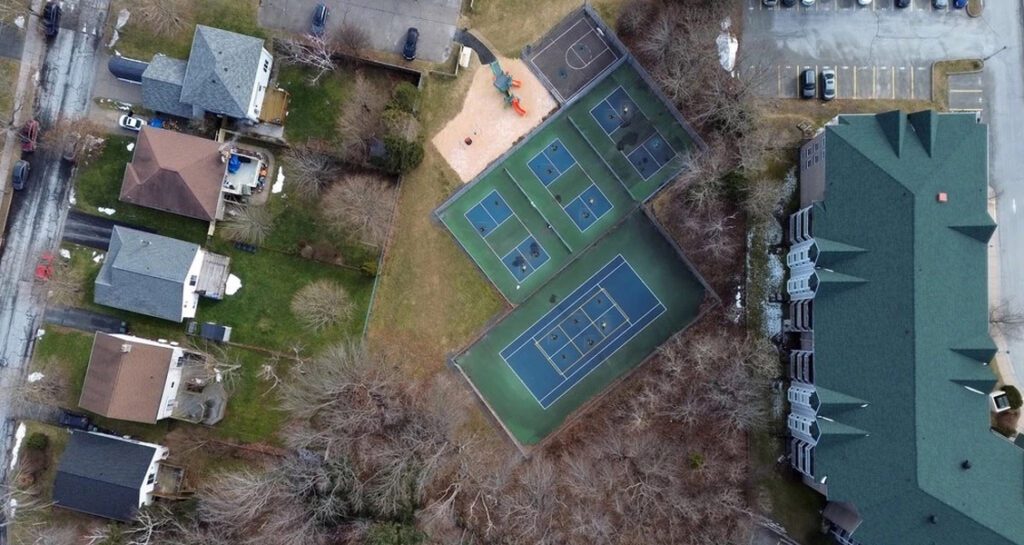
Plan site placement carefully — ensure that appropriate expertise is brought to bear during planning so that courts can be located and oriented suitably, with natural or engineered noise buffers and barriers where appropriate.
-
Engage communities before and after construction to manage expectations.
-
Commission acoustic studies for noise baseline and complaint verification.
-
Collaborate with acoustical consultants to draft, update, or harmonize noise regulations for transparency and consistency.
-
Review and update noise ordinances and bylaws regularly as recreation patterns evolve.
In Conclusion
Outdoor sports and recreation noise is often a sign of a vibrant, healthy and active community. However, when noise standards lack clarity, it can lead to frustration, inconsistent enforcement, and community conflict. By combining objective sound data, meaningful community engagement, and clear, well-defined policy language—developed with the support of acoustical consulting experts such as HGC—municipalities can better balance active recreation with residential amenity. This evidence-based approach supports fair, transparent, and defensible enforcement decisions, helping communities remain both active and livable.