


McNamee Place, Squamish, British Columbia
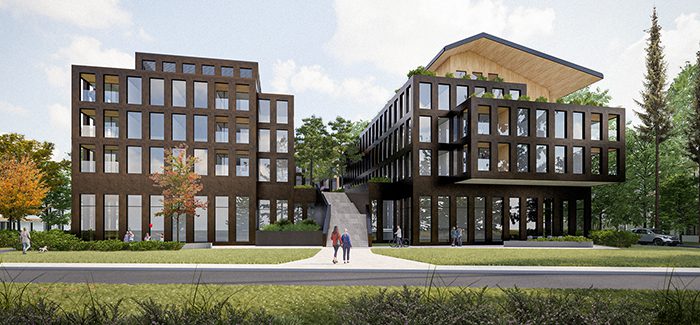
Location: Squamish, British Columbia
Owner/Operator: ReCanvas
Architect: HCMA Architecture & Design
How HGC Assessed the Impact of Rail traffic Noise and Vibration on Multi-Family Housing in Squamish, British Columbia
McNamee Place is planned as a community-focused residential development in Squamish’s Dentville neighborhood, bringing together a blend of market homes and affordable rentals within a coordinated site plan that emphasizes shared amenities and everyday livability.
The site’s context also places the development near an active CN Rail line corridor, which introduces distinct acoustic and vibration design considerations compared with typical urban road exposure concerns. Rail pass-bys can create intermittent exterior sound events and ground-borne vibration that becomes more noticeable once indoor spaces are otherwise quiet—particularly in sleeping and living areas where comfort expectations are highest. As a result, municipal review and rail authority input commonly require early confirmation that a project can achieve reasonable indoor acoustic comfort and vibration acceptability through clear, implementable design measures.
Rail Traffic Noise and Vibration Feasibility Study
HGC Noise Vibration Acoustics was retained to prepare a rail traffic noise and vibration feasibility study for the proposed development in support of the approvals process and to address comments related to nearby rail operations. The work began with a review of the preliminary architectural package and site planning information to understand building placement, rail-facing façades, and the amenity areas most likely to be influenced by rail activity.
A site reconnaissance was completed to confirm the dominant environmental noise source and observe shielding and propagation conditions that would influence the assessment and the mitigation strategy. In parallel, HGC completed ground-borne vibration monitoring focused on the portion of the property closest to the rail corridor, recognizing that intermittent rail events are best evaluated through a monitoring approach capable of capturing representative pass-bys over time. This combination of document review, site context verification, and measurement-based evaluation provided a defensible basis for assessing vibration acceptability and identifying where targeted isolation may be prudent as the design progresses.
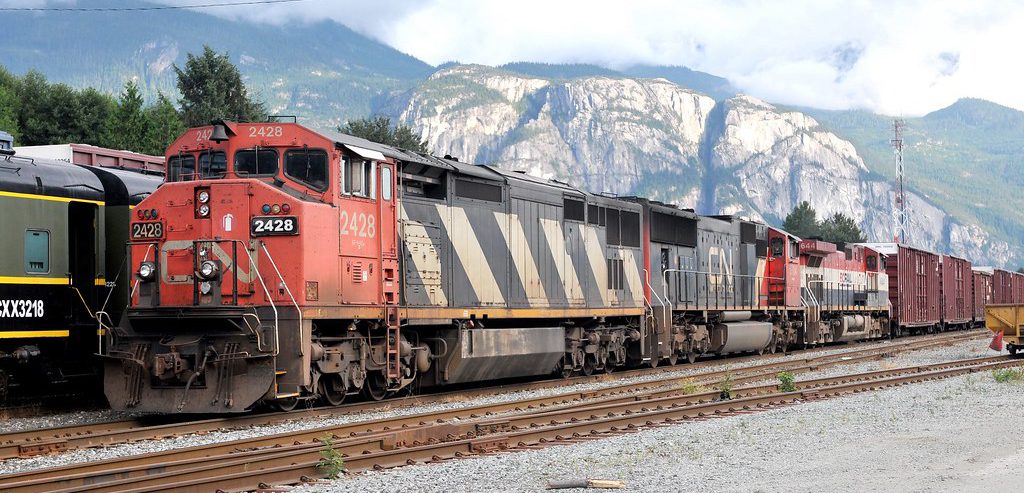
Rail Noise and Ground-Borne Vibration Considerations
To assess rail noise exposure, HGC obtained rail traffic information from the railway authority and applied accepted prediction methods suitable for development review and rail-adjacent residential assessment. The study was conducted following the New Development in Proximity to Railway Operations published by The Federation of Canadian Municipalities and the Railway Association of Canada (FCM/RAC). Future rail noise levels were estimated at representative façades and at key outdoor amenity locations, then compared with commonly applied proximity-to-rail guidance and rail authority expectations referenced through the municipal review process.
For vibration, ground response captured during monitoring was evaluated against established residential acceptability criteria and perception-based standards typically used to characterize how vibration may be experienced by occupants. Because structure-borne vibration transmission can be influenced by building form, structural systems, and interior fit-out, HGC’s feasibility conclusions were framed to guide early decisions while allowing refinement as structural and geotechnical details evolve through design development
HGC’s Recommended Acoustical Solutions
The feasibility study confirmed that comfortable interior conditions for rail-adjacent housing are primarily achieved through coordinated envelope and ventilation strategies that address rail-facing exposure in a reliable, buildable way. For façades with direct rail influence, HGC recommended a robust exterior wall approach aligned with rail authority requirements, paired with upgraded glazing performance and careful detailing at joints, seals, and penetrations so the intended acoustic performance is maintained once installed.
Indoor Acoustical Comfort
Because indoor comfort should not depend on residents keeping windows closed by preference alone, HGC recommended providing an alternative means of ventilation for suites with higher exposure to rail noise. This supports predictable indoor conditions during sensitive periods and helps maintain the project’s livability intent without compromising the integrity of the building envelope.
Outdoor Amenity Acoustical Comfort
For outdoor amenity areas, HGC evaluated whether local shielding would be warranted to support comfortable passive use consistent with the project’s outdoor-living goals. Where additional control is beneficial, conceptual options typically include site-integrated barriers or landscape strategies that complement the architecture and can be coordinated alongside circulation and amenity planning.
Rail-facing Side Vibration Mitigation Considerations
From a vibration perspective, the monitoring results supported overall feasibility while highlighting the value of prudent measures closest to the rail-facing side of the structure. HGC recommended considering targeted vibration isolation at appropriate foundation interfaces as a risk-managed step that can be integrated with the structural and geotechnical design as details are finalized.
Finally, because rail operations can change over time and individual sensitivity varies, HGC also provided guidance on warning clauses suitable for development agreements and for purchase or lease documentation, helping set clear expectations for future occupants about the potential for audible rail activity and perceptible vibration.
Acoustical Services Provided by HGC Noise Vibration Acoustics
-
Review of preliminary architectural and site planning information to identify rail-exposed façades and amenity
-
Site reconnaissance to confirm environmental noise context and dominant sources
-
Ground-borne vibration monitoring associated with rail pass-bys
-
Rail noise prediction and assessment using Rail traffic data and accepted proximity-to-rail guidance as required by District of Squamish, CN Rail and the Federation of Canadian Municipalities and the Railway Association of Canada
-
Conceptual recommendations for façade, glazing, ventilation, outdoor area mitigation, vibration isolation, and warning clauses

