


University of Saskatchewan Murray Library Renovation

Location: Saskatoon, Saskatchewan
Owner/Operator: University of Saskatchewan
Architect: Group2 Architecture Interior Design
Consulting Engineers: Key West Engineering
General Contractor: PCL Construction
How HGC assessed and mitigated indoor HVAC noise performance during a University Library renewal project in Saskatoon
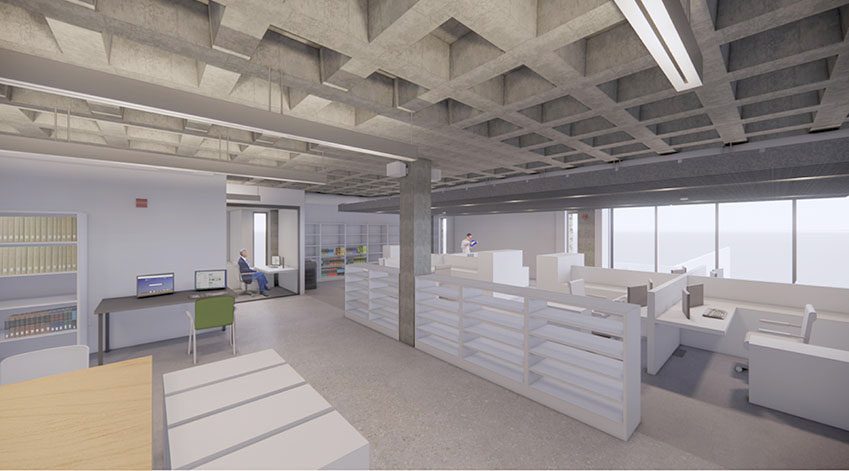
The Murray Library renewal is part of a broader effort to modernize building infrastructure and reimagine interior spaces in the heart of the University of Saskatchewan campus. As part of this work, the upper-level renewal was planned to become the new home for University Archives and Special Collections, bringing together preservation-focused collections storage with researcher-facing areas and staff workspaces designed to support access, learning, and behind-the-scenes collections care. The project also included building-system upgrades and envelope improvements intended to enhance comfort and functionality in a busy, active academic environment.
Acoustical Design Challenges for an Archives and Library Renovation
In library and archival settings, acoustic comfort is more than a “nice-to-have”—it directly affects how people read, study, collaborate, and engage with staff in specialized spaces. For this renewal, the design challenge centred on ensuring that new ventilation infrastructure could support preservation and comfort goals without introducing intrusive background noise into areas where speech clarity, concentration, and a calm environment matter most.
The project included the introduction of multiple new air handling units and associated distribution pathways serving distinct program areas within the renewed archives level. With equipment located in mechanical penthouse areas and new ductwork and shafts routed through the renovated floor, the design team needed early guidance on where HVAC-related sound could propagate into critical rooms through duct-borne transmission or radiated breakout from ductwork.
HGC’s Acoustical Assessment Approach
HGC Noise Vibration Acoustics was retained to provide an acoustical design review focused on indoor HVAC noise performance for the renewed archives level. The work emphasized proactive design support: reviewing architectural and mechanical documentation, evaluating equipment submittal sound information, and assessing how the proposed duct layouts would carry sound into representative “worst-case” locations based on routing and room function.
A key part of the approach was identifying the dominant drivers of indoor mechanical noise in real buildings—particularly the way supply and return systems can transmit sound efficiently when distances are short, transitions are direct, or attenuation opportunities are limited by space constraints typical of major renovations. HGC also considered how interior conditions planned for the renewed level could influence perceived sound, including situations where ceiling and finish strategies reduce the acoustic “buffering” many manufacturers implicitly assume in standard ratings.
HGC’s Acoustical Recommendations for Renewed Library Environment Mechanical Systems
The review identified locations where duct-borne noise from the air handling systems was likely to be the primary contributor to background sound in collections and work areas, and where targeted control measures would be the most effective path to achieve a comfortable outcome. In response, HGC Noise Vibration Acoustics recommended practical, buildable strategies that could be integrated into the mechanical design without disrupting the overall intent, including the strategic use of duct silencers in key plenum locations so sound is addressed before it is distributed widely through the system.
In areas where return-air pathways were positioned in ways that provided limited natural attenuation, HGC recommended focused upgrades to internal acoustic duct lining in appropriate duct segments near the equipment—an approach that often delivers meaningful improvement while remaining straightforward for coordination and construction.
For more acoustically sensitive spaces such as meeting or presentation functions, HGC highlighted the importance of aligning terminal unit selection and air distribution decisions with the room’s intended experience, since localized airflow and branch conditions can become noticeable if not coordinated early. Where necessary, the guidance supported mechanical refinements that preserve speech clarity and reduce distraction, while maintaining the operational performance expected of modern building services in an archives setting.
Acoustical Services Provided by HGC Noise Vibration Acoustics
-
Acoustical design review of proposed air handling and ductwork serving the renewed archives level
-
Review of architectural and mechanical drawings and equipment submittal information relevant to indoor HVAC noise
-
Assessment of key sound transmission paths including duct-borne and breakout contributions
-
Design recommendations for silencers, duct lining, and related HVAC noise control strategies
-
Coordination-oriented guidance to support acoustic comfort in collections, staff, and presentation/support spaces

